Wednesday, July 24, 2024

The famous Chinese legend of Bole appraises horses

In ancient China, there was a renowned horse evaluator named Bole. He was famous for his extraordinary ability to recognize the potential of horses that others often overlooked. One day, a man brought a horse to Bole, seeking his opinion. Upon examining the horse, Bole declared that it had great potential despite its ordinary and unimpressive appearance.

Unlike others who dismissed the horse as mediocre, Bole saw something special in it. He believed that a truly exceptional horse might not always stand out at first glance. Bole's unique talent lay in his ability to perceive the hidden strengths and capabilities of horses that were not immediately obvious to others.

As time went on, and with proper training and care, the horse began to exhibit outstanding qualities. It became faster, stronger, and more enduring than anyone had anticipated. The horse's remarkable performance validated Bole's initial judgment, proving that he had an unparalleled eye for discerning talent in even the most unassuming horses.

Four years ago, at the Milwaukee Chinese School, I often saw a white man in his sixties, with kind eyes and a tall stature. Every time he came to the Chinese school, he sat quietly in the classroom full of Chinese parents. Once, out of curiosity, I asked him, "What is your name?" He replied in somewhat broken Chinese, "My name is Bole." I didn't catch it clearly, so I asked, "What Bole?" He said, "Bole, the Bole who understands horses."

Through conversation, I learned that his name was Bob and he was retired. Recently, he had married a retired Chinese teacher. He could speak a little Chinese. "Bole" was the Chinese name his Chinese wife gave him. It seemed he knew the story of "Bole appraises horses" and he liked this Chinese name. 

Bole's Chinese wife used to be a primary and middle school teacher in China. The Chinese school was in need of experienced teachers like her, so they hired her to teach there. She also wanted something to do, so she came. Because she didn't know how to drive, Bole would come to drop her off each time. Bole didn't know many Chinese people, but he was very cheerful and talkative. As long as you were willing, he was always happy to chat. At that time, it was during the presidential election, and Bole often discussed it with a Chinese neighbor of his. He supported Bush, while the Chinese parent supported Gore. They always argued, but the atmosphere was very friendly. Of course, he later voted for Bush.

Shortly after Bush was elected, it was reported that Bole had cancer. The heads of the Chinese school even went to the hospital to visit him. But a few months later, he still passed away. It was truly unfortunate. I've seen many Americans who were lively just a few months ago, but they passed away shortly after falling ill. Compared to many Chinese people who lie in bed for years or even decades, it was too quick. But it's better this way, reducing the time of suffering. Also, there's no need to fear the Chinese saying, "There are no filial sons by the bedside of a long-ill parent."

Now, another election is upon us. If Bole were aware from beyond the grave, I wonder if he would recognize that he chose the right person back then. There's a Chinese saying, "There are many fine horses, but few Boles." The fact that the story of "Bole and his horses" has survived to this day shows people's high praise and nostalgia for Bole's insight. I often think, if Bole were to choose a president, he would surely pick a good one. At least let him be a commentator in the election, so the voters have a backbone.

One night, while thinking about the election, I fell asleep unknowingly. In my dream, I walked into a secluded valley and saw an old man with an immortal air, meditating in a pavilion. I approached him and found out he was Bole.

I asked him for advice on the U.S. presidential election. Bole said, "I only know how to choose horses, not presidents." I begged him to talk about it. He said, "Young man, it's not that I'm unwilling, but I can't. Choosing a president is completely different from choosing a horse." I asked, "How are they different? Please enlighten me, sir."

Seeing my sincerity, Bole slowly explained, "Firstly, horses can't speak, but people can. A horse can't boast about how fast it runs, but people can say, 'I've done so well, so well.' Isn't this good? The voters would understand the candidates better, wouldn't they? But their words are often hard to distinguish between true and false, and there are many lies, empty words, and nonsense. Many promises are made but often not fulfilled." "That's true. What's the second reason?" "Horses don't damage other horses. They don't say that this horse is too ugly, that horse is too lazy, or that horse stole something. But presidential candidates advertise every day, saying how bad a certain candidate is, how unreliable they are. 'Charge them with a crime before they've committed one.' Lies are told so frequently that they're not afraid you won't believe them." "Then let's just observe their actions." "That sounds simple, but it's difficult to do. For horses, even if a horse could speak ill of another, you can tell who's better by comparing them. Chinese people often say, 'Don't be afraid of not knowing goods, be afraid of comparing them.' 'Whether it's a mule or a horse, take it out for a stroll.' The horses I chose were not favored by others. But as soon as they were on the track, it was clear. But you can't compare when choosing a president." "Why? Can't presidents be compared?" "A country only has one president. There can't be two presidents at the same time. How can you compare them?" "But there must be a distinction between good and bad presidents, right?" "If a president does well, others won't have a chance. When you buy something and use it well, you won't change it easily." "Are you saying that elections only matter when the president does poorly?" "You could say that. But even if the president does poorly, he would say, 'Thanks to me, the country is what

 it is today. In such difficult times, if someone else took over, it would be even worse.' You can't prove whether his words are right or wrong. So the goodness or badness of a president cannot be objectively examined." "So you mean there are no objective standards for good or bad?" "There are standards. It's just that Zhang San has Zhang San's standards, and Li Si has Li Si's standards. There's no standard that everyone agrees on like with horse racing." "Then what are they comparing?" "Presidential campaigns are about who 'speaks' well, not about who 'acts' well." "Your analysis, sir, is truly profound. Can't you join the election? Everyone would value your opinion." "I can't." "Why not?" "If I recommend an elector, he will surely lose." "How could that be?" "Because he'll only have one vote, and that's mine." "No, doesn't anyone else trust your judgment? Many people would vote for your candidate." "Most people agree with me, then I wouldn't be Bole anymore!"

Before I could come to my senses, the old man had already left in a puff of smoke. As I was about to chase after him, the alarm clock rang. I woke up, and it was already 6:30. Oh no, I had to get up, or my son would miss the school bus.

Written in 2004.


Friday, June 28, 2024

Why Do People Revere Tea with a Religious Devotion?

Tea, like coffee, is one of the most popular natural beverages in the world. However, tea enthusiasts harbor a religious-like reverence for tea. This devotion is evident in the ceremonies, tea arts, and tea culture, where people demonstrate a respectful piety unmatched by any other food or drink.


Japanese Tea Ceremony


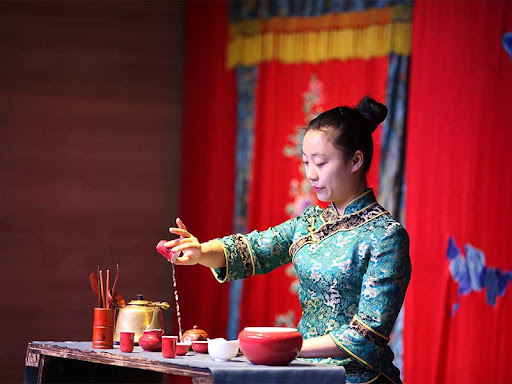
Chinese Tea Art


What is the tea ceremony, and what are tea arts? If you ask 100 people, 95 might say they don't know or can't explain it clearly, and the remaining 5 might offer five different answers. Some say the tea ceremony is a lifestyle, and tea arts are a form of performance. This seems reasonable but still feels vague and elusive. There are many lifestyles—drinking coffee, consuming alcohol, or following a vegetarian diet—but there is no "coffee ceremony," "wine ceremony," or "vegetarian ceremony," nor are there performance arts dedicated to these practices.


A Google search for "the origin of tea" yields two legends. One claims that tea originated in the Ba region of the Western Zhou Dynasty (present-day northern Sichuan and southern Shaanxi). Another says that tea was produced in Chibi, Hubei, and was promoted by Zhu Yuanzhang, the discovered tea and developed tea processing techniques.


The earliest tea was green tea. But how was green tea discovered? There are no records in this regard. I believe that in ancient times, due to low productivity and frequent natural and man-made disasters, people often went hungry. As a result, they would eat any edible plants and animals, trying things they had never eaten before. Tea leaves must have been one of the plants people tried. The Chinese cooking method involves stir-frying; they picked tender tea tips and stir-fried them in a pot, similar to how people stir-fry toona leaves with eggs. They quickly discovered that brewed tea soup was fragrant, especially after stir-frying the leaves and boiling them in water, which was refreshing. Historically, people consumed tea by eating the leaves as well, indicating that tea was considered a vegetable, soup, or medicine. Because it tasted good, people wanted to enjoy it year-round. Thus, like preserving green beans, chili peppers, green vegetables, and eggplants by drying or pickling, tea leaves were also dried for winter consumption, giving rise to the early methods of green tea production. Over time, the process of making green tea was gradually perfected. Today, some ethnic groups still consume tea leaves.


Pan – Fried Tea, the traditional way of making green tea


Interestingly, both the tea ceremony and tea arts thrive in regions where green tea is consumed, not in areas where black tea is popular, such as Europe. Why is this?


Green tea is unique and astonishing because when steeped in hot water, the small, dark tea leaves gradually unfurl into bright green buds, floating upright in the water, vividly recreating their original, vibrant form. It is as if they come back to life. Can you imagine any other plant with such magical properties? Coffee, wine, or any vegetable? Absolutely not.


Green Tea: vivid and lifelike in boiling water


Having worked as a tea technician, I have made tea myself. Watching the green tea I made unfold its leaves in a cup, vividly showcasing its beauty, was emotionally moving. Observing the tea in the water is a visual pleasure, making it almost reluctant to drink.


I once attended many Chinese church revival meetings and remember a famous pastor repeatedly emphasizing that belief in Jesus' resurrection is crucial to being a Christian. Indeed, if Jesus can rise from the dead, what else can He be but divine? Only a deity has the power to resurrect.


Green tea undergoes high-temperature pan-frying, rolling, and drying, and finally "resurrects" in the tea cup. Coupled with tea's medicinal properties and refreshing effects, it seems to possess a divine power unmatched by ordinary plants. Our ancestors, who revered deities, developed a similar reverence for tea. The slow, focused rituals of the tea ceremony reflect a devotion to tea akin to worshiping a deity. These elaborate procedures surpass even ancestral or deity worship rituals in complexity. It's not just drinking tea; it's a ritualistic worship of the tea deity.


Why does the tea ceremony flourish in green tea-consuming regions like China, Japan, and Southeast Asia, but not in black tea-consuming regions like Britain and Europe? Some say Britain has an afternoon tea culture, but that is a social custom, entirely different from the tea ceremony.


Afternoon tea time


Green tea requires fresh spring buds, which are the essence of a tea plant's year's growth. Leaves used for black tea can be from various stages of growth. The high-temperature process of green tea production transforms tender green leaves into tea strips dramatically, while black tea's fermentation is slow and peaceful. The brewed green tea leaves vividly revert to their original state, floating in the water and mesmerizing observers. In contrast, black tea produces a mellow liquor, and the leaves rest quietly at the cup's bottom, lacking the visual impact of green tea.


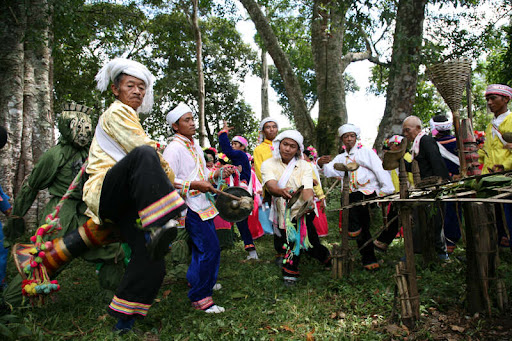
A CCTV series, "Tea: The Story of a Leaf," introduces the Blang tribe of Jingmai Mountain, Yunnan, in the Pu'er tea-producing region. They consider themselves descendants of the tea deity and hold an annual Tea Ancestor Festival in April. Every year there's a small festival, and every four years, a grand one, with everyone participating and sacrificing cattle to honor the tea ancestor. They also worship the tea ancestor at the Pa'ai Leng temple. Legend has it that over 1,800 years ago, Pa'ai Leng discovered that tea could cure diseases, saving his tribe from a plague. Since then, the Blang people have regarded him as the embodiment of the tea deity. Whenever they open a new tea garden, the first tea tree planted is called the "Tea Soul Tree," and during the Tea Ancestor Festival, they call the tea soul back to celebrate together.


Although the Blang tribe's Pu'er tea is a dark tea, the initial production process is similar to that of green tea, with only fermentation added later. It is not difficult to deduce that their ancestors first invented green tea, which later evolved into the dark tea production method. During the discovery phase of green tea, they developed a reverence for tea, leading to the emergence of ancestral tea worship activities.


Blang people celebrate the Tea festival every April


People's reverence for tea is most fully expressed in the tea ceremony, which elevates tea to a sacred status. According to CCTV's "Tea: The Story of a Leaf," Chinese tea culture reached a high level during the Song Dynasty. Japanese monks came to China to learn the Jingshan tea banquet ceremony in Zhejiang. After mastering it, they brought it back to Japan. Today's Japanese tea ceremony evolved from the Song Dynasty's Jingshan tea banquet. While the Jingshan tea banquet has been lost in China, the Japanese tea ceremony has preserved it. This is the origin of the tea ceremony. Guangdong's Gongfu tea is also meticulous and somewhat similar to the tea ceremony. Watching friends drink Gongfu tea, every gesture is filled with reverence for tea.


For tea culture enthusiasts, while tea may not be a deity, it holds a god-like charm and status.


The famous Chinese legend of Bole appraises horses

In ancient China, there was a renowned horse evaluator named Bole. He was famous for his extraordinary ability to recognize the potential of...